Data and dashboards
One set of numbers, refreshed before your day starts.
Pipelines that bring your data together on a schedule, checks that catch bad data early, and dashboards people actually use.
The problem
If it takes a day to build the report, the report is already a day old.
Your numbers live in ERP exports, spreadsheets and three different systems. Every weekly review means a day of copying, pasting and checking. And when two reports disagree, nobody knows which one is right, so decisions wait.
What we do
What it does, working as one system.
-
Scheduled pipelines
Data pulled from each source on a schedule into one warehouse, with history kept.
-
Data checks
Tests that flag missing, late or odd data before it reaches a report.
-
One definition per number
Each key metric written down once, so every report calculates it the same way.
-
Dashboards and reports
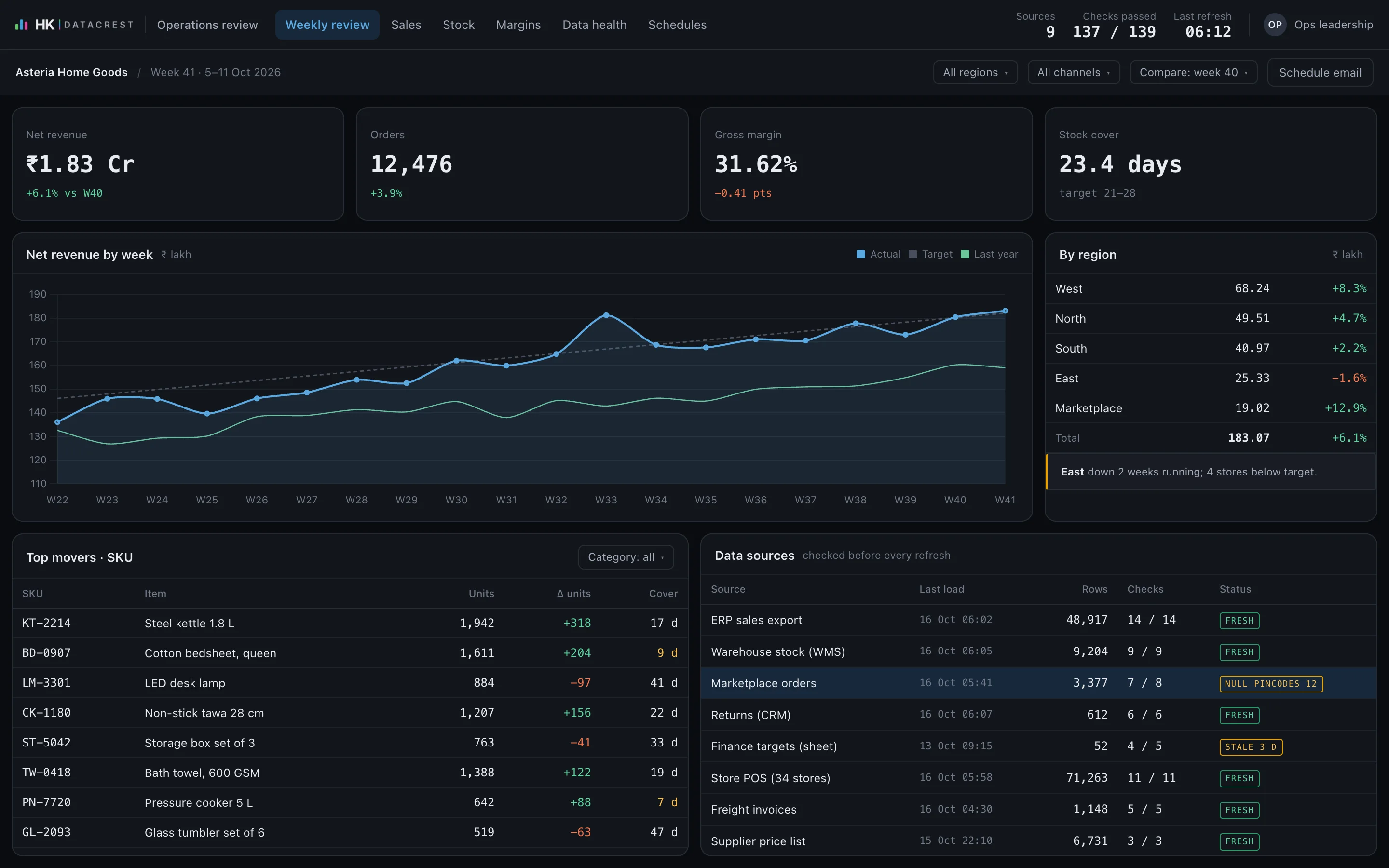
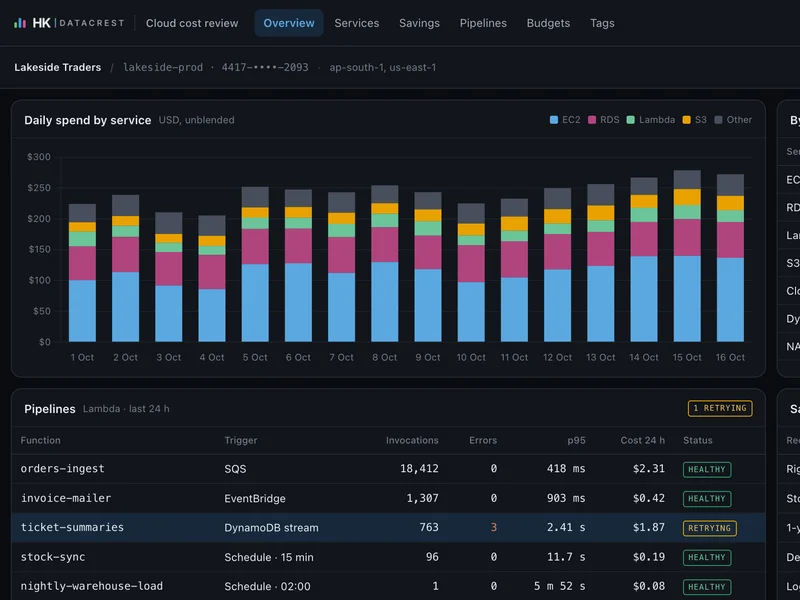
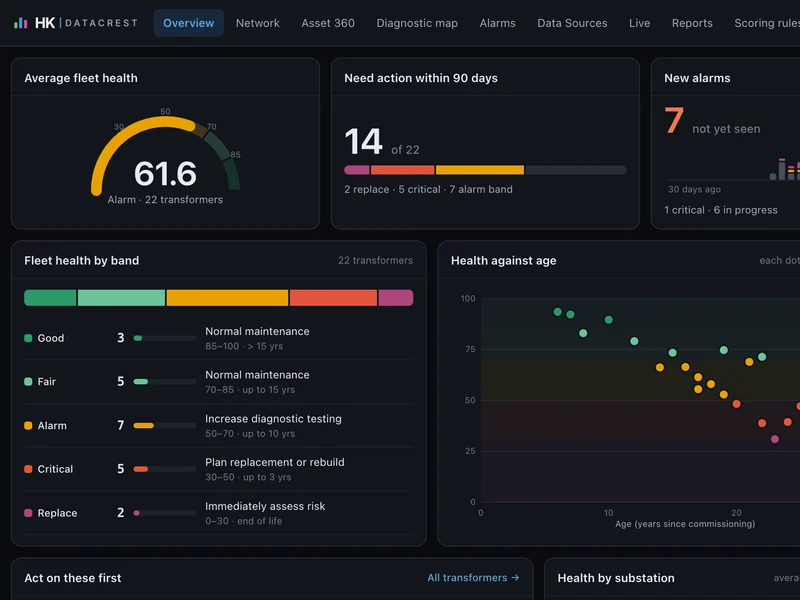
Dashboards, scheduled emails and AI summaries for the people who need them.
How it works
From your data to a working system.
Trace the numbers
Where each number really comes from, and who relies on it.
Build the pipelines
Sources loaded and modelled in a warehouse, with checks on every load.
Agree the metrics
Definitions signed off by the people who use them.
Ship the dashboards
Starting with the report that hurts most.
What changes
What you get from it.
- The weekly report builds itself. Ready before the meeting, not the night before.
- Bad data caught at the door. Checks run before anyone sees a number.
- One answer per question. Every report uses the same definitions.
- Time back for the people who built the spreadsheets. They get to use the numbers instead.
How we engage
Start small. Decide with evidence.
-
Prove it on your data
Automate the one report your team rebuilds by hand every week, from source to scheduled email.
Fixed scope · fixed price · agreed before work starts
-
Roll it out
If the pilot earns it, we build the full system, connect the rest of your data and bring your team onto it.
Only if the pilot earns it
-
Run it, or own it
We keep it running and improving, or hand it over with the code, the documentation and a runbook.
Your code · your data · your cloud account
Questions
What people ask before a first call.
Which tools do you use?
Whatever fits your size and budget. Often AWS serverless services, a cloud warehouse and a standard dashboard tool, rather than a large platform.
Do we have to move everything at once?
No. We start with one report, make it automatic and trusted, then extend.
Start with a conversation
Tell us what's slowing your operation down.
A 30-minute call with the people who would build it. You leave knowing whether a pilot makes sense, and what it would cover.