Solar plant reporting
Every morning, a plant report that explains itself.
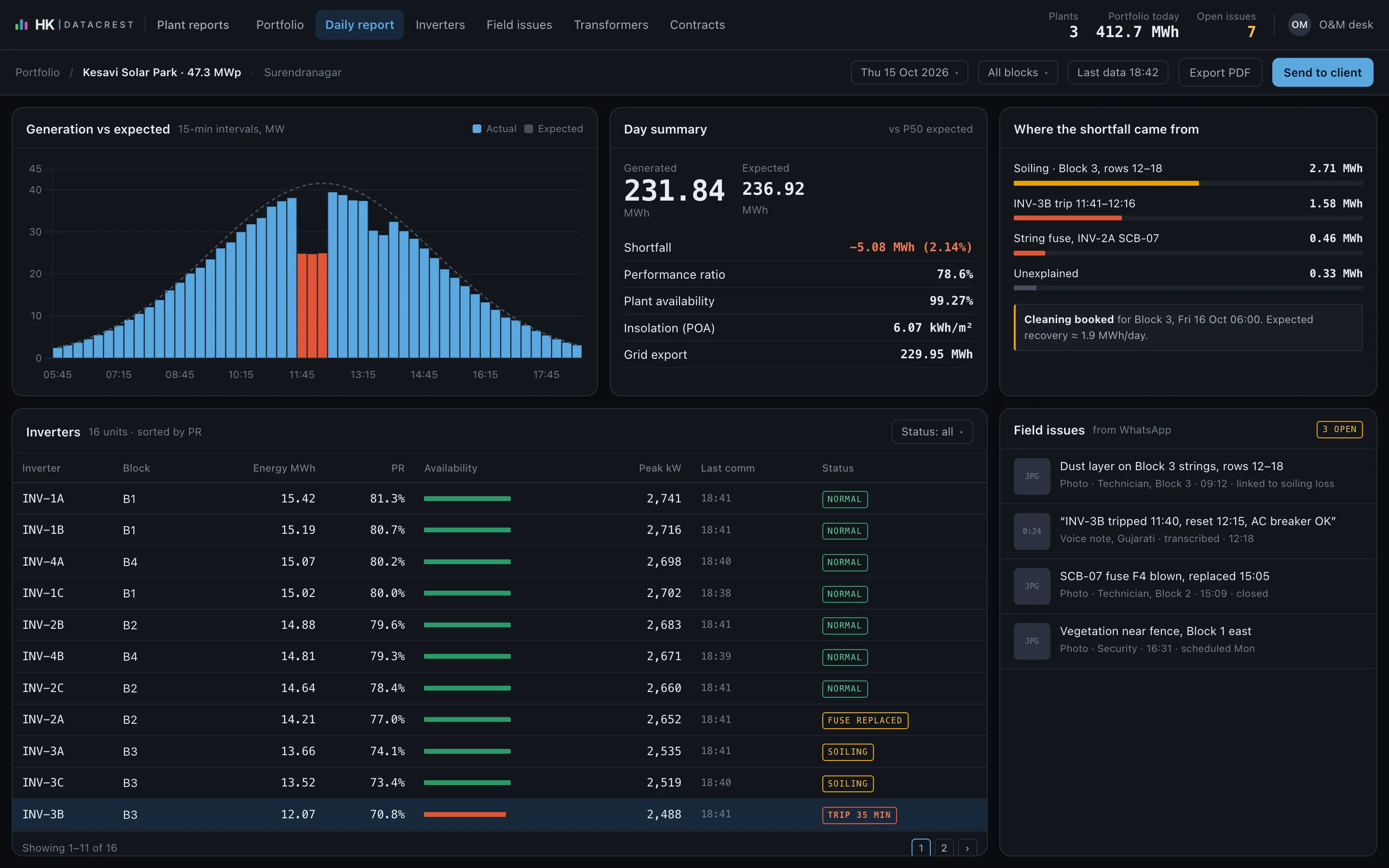
Generation against expected, the cause of every shortfall, field issues from WhatsApp and transformer health, in one daily report ready to send.
The problem
Owners see the shortfall. They rarely see why.
The daily generation report is still put together by hand from inverter exports, weather data and technicians' messages. It takes hours and arrives late. And when output falls short, the reason is sitting in a WhatsApp photo that never reaches the report.
What we do
What it does, working as one system.
-
Field capture from WhatsApp
Technicians keep using WhatsApp. Photos and voice notes, including in Gujarati, become logged issues against the right block or inverter.
-
Shortfall analysis
Actual generation compared with expected, and the gap split into causes such as soiling, inverter trips and grid curtailment.
-
Transformer health
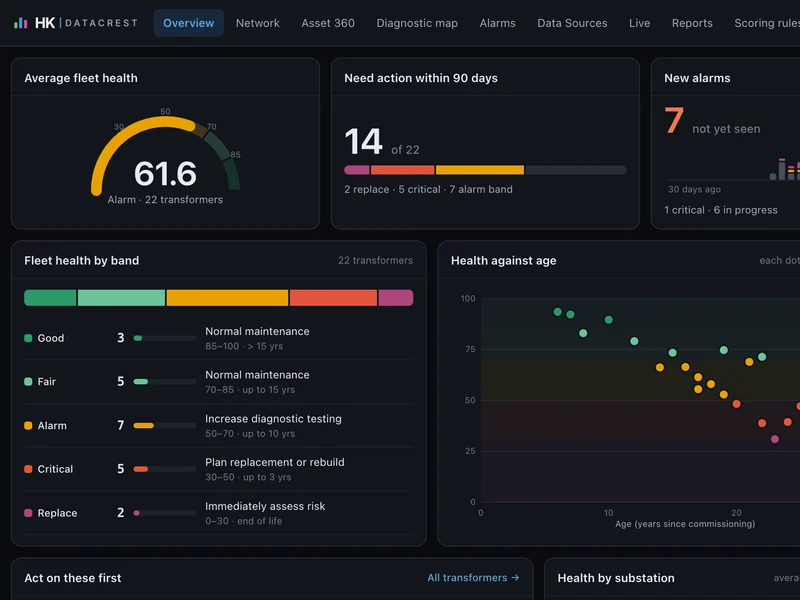
Plant transformers scored by the same engine as our asset health solution.
-
The daily report
A daily generation report in the format your clients expect, ready to review and send.
How it works
From your data to a working system.
Connect the plant
Inverter and monitoring data, plus the plant's expected-generation model.
Connect the field
Your technicians' WhatsApp group becomes a structured issue log.
Explain the gap
Every day's shortfall is split into causes, with the evidence attached.
Send the report
Reviewed by your team, sent to the owner before the day starts.
What changes
What you get from it.
- Reports out before breakfast. Not assembled by hand at the end of the day.
- Every lost MWh has a reason. Soiling, trips and curtailment, each with its evidence.
- Nothing lost in the chat. Field messages become tracked issues.
- Contract uptime always in view. Availability tracked against each contract's target.
How we engage
Start small. Decide with evidence.
-
Prove it on your data
One plant, a fixed scope agreed upfront, and a few weeks of your real data. At the end you have working daily reports and decide whether to roll out.
Fixed scope · fixed price · agreed before work starts
-
Roll it out
If the pilot earns it, we build the full system, connect the rest of your data and bring your team onto it.
Only if the pilot earns it
-
Run it, or own it
We keep it running and improving, or hand it over with the code, the documentation and a runbook.
Your code · your data · your cloud account
Questions
What people ask before a first call.
Do technicians need a new app?
No. They keep using WhatsApp.
Start with a conversation
Tell us what's slowing your operation down.
A 30-minute call with the people who would build it. You leave knowing whether a pilot makes sense, and what it would cover.