Logistics
Planning 40 vans around windows, loads and hours, every morning.
A regional distributor in the Dallas–Fort Worth area running about 40 vans and trucks from two depots, delivering to around 600 business customers a week, typically plans tomorrow's routes each afternoon in a spreadsheet, with two senior dispatchers holding the rules in their heads.
- Industry
- Logistics
- Solutions
- Plan the shortest delivery routes · Put all your numbers in one place
- Engagement
- Pilot, then build and run
The challenge
The plan works, as long as the same two people are in the building.
Vans leave part empty, some routes run past drivers' hours, and a late order or a sick driver means an hour of phone calls. Customers have stopped trusting ETAs, and planning knowledge sits with two people.
The approach
How it works.
Capture the real rules
Delivery windows, vehicle capacity by weight and volume, hours-of-service limits and depot cut-offs are written down with the dispatchers, including the unwritten ones.
Replay the past
The planner runs on a few weeks of historical orders, so its routes can be compared stop by stop with what the vans actually drove.
Plan and adjust
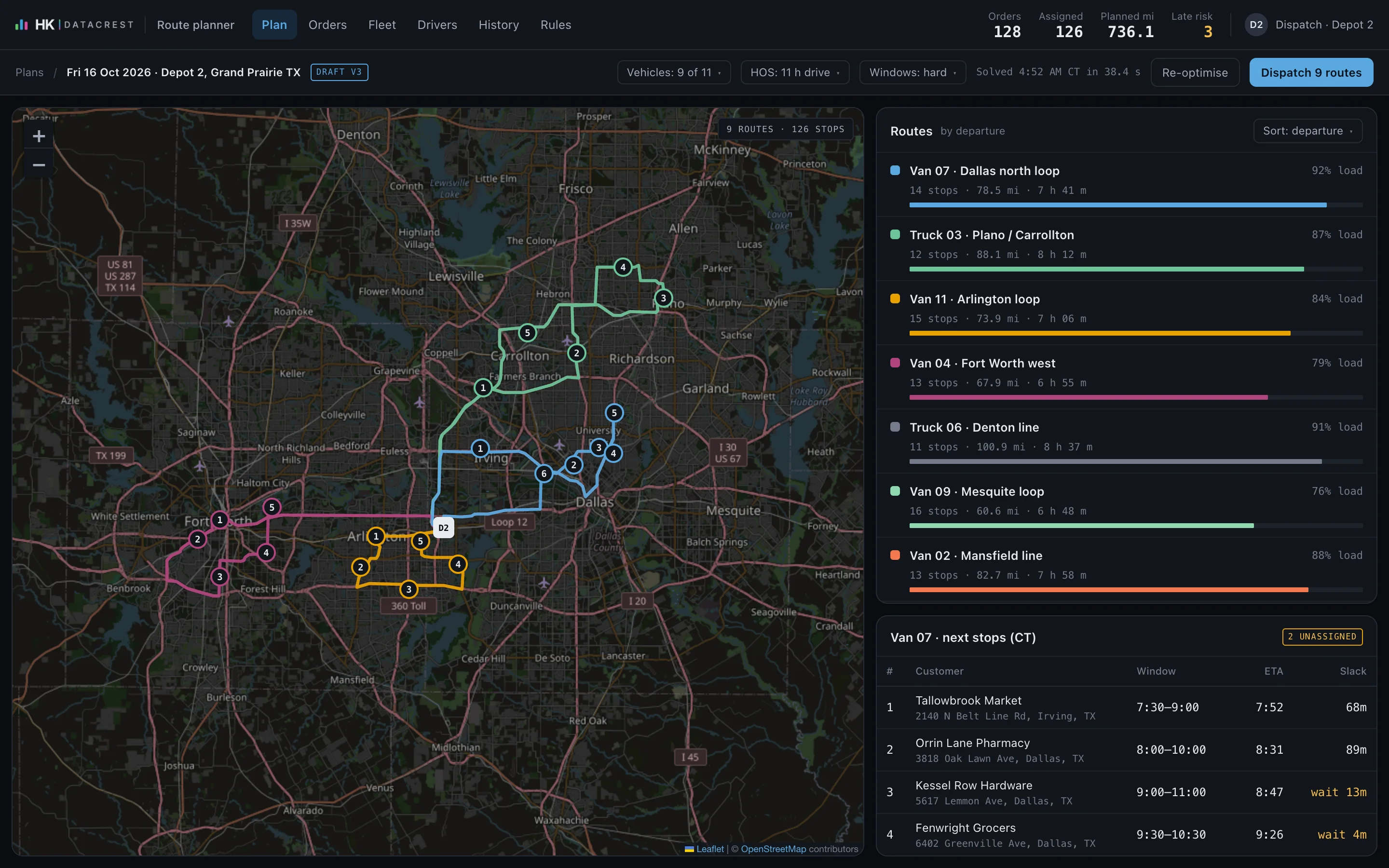
Dispatchers get a daily plan they can adjust by hand, seeing miles, load and hours change as they move a stop.
Dispatch
Approved routes go to drivers' phones and to the order system, with ETAs for customers.
The solution
What gets built.
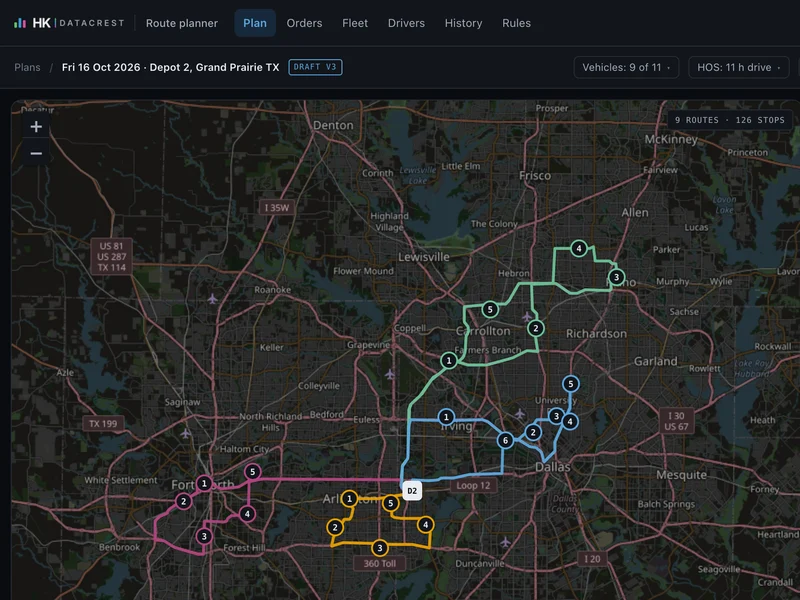
The solution is our route planner, configured with the depots, fleet and rules: a map of the day's routes, load and hours per vehicle, the next stops with windows and ETAs, and a one-click replan when orders change.
Outcomes
What it delivers.
- Every route within the rules windows, load limits and hours of service respected by design.
- Changes absorbed in minutes instead of an afternoon of calls.
- Planning that does not depend on two people because the rules live in the system.
- Miles, load and hours visible daily so the operation can be managed by numbers.
Technology
Typical stack for this.
Related solutions
The solutions behind it.
Start with a conversation
Tell us what's slowing your operation down.
A 30-minute call with the people who would build it. You leave knowing whether a pilot makes sense, and what it would cover.