Energy and utilities
Ranking 180 transformers by condition, from data the utility already had.
For a regional power utility running around 180 substation transformers, many past 25 years in service, the evidence is scattered: dissolved gas results arrive from the lab as PDFs, online monitors feed SCADA on a few critical units, and inspection notes live in spreadsheets kept by each zone.
- Industry
- Energy and utilities
- Solutions
- Know which assets need attention first · Put all your numbers in one place
- Engagement
- Pilot, then build and run
The challenge
Every zone has a list of worries. Nobody has one list for the whole fleet.
Outage windows are booked a year ahead and replacement budgets are fought for every quarter. Without a common view, the asset management team plans by age and by whoever raised the loudest concern, and a deteriorating unit can sit unnoticed between tests.
The approach
How it works.
Collect the evidence
Lab results, monitor exports, inspection sheets and work orders are loaded for every transformer, with gaps and stale tests flagged rather than guessed.
Agree the rules
The utility's engineers review the scoring ruleset: which tests matter, how much, and the thresholds that match their own standards.
Score and explain
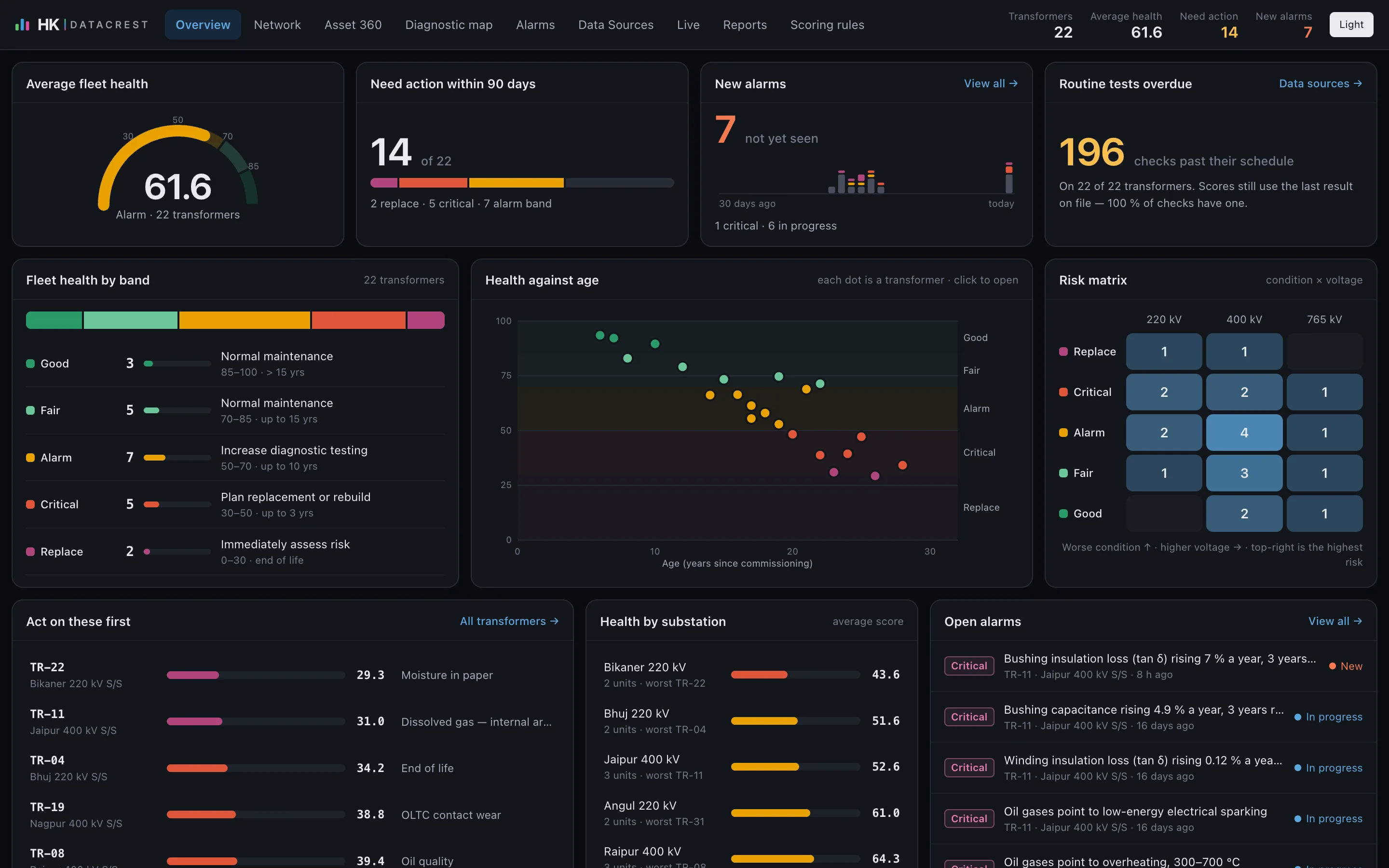
Every unit gets a 0 to 100 index, a band and a recommended action, with each lost point traced to a specific reading.
Plan from one list
The ranked worklist feeds outage and budget planning, and alarms flag any reading that moves the wrong way between reviews.
The solution
What gets built.
The solution is our asset health application, configured with a transformer ruleset for this fleet: a fleet overview, a per-unit breakdown, a diagnostic map of the physical unit, and printable reports for each asset and for the board.
Outcomes
What it delivers.
- One ranked list for the whole fleet so outage slots and budget go to the units most likely to need them.
- Every score explained so engineers can challenge a ranking with evidence, not opinion.
- Missing and late tests made visible so the testing programme targets the gaps that matter.
- Board-ready reports from the same scores the engineers use.
Technology
Typical stack for this.
Related solutions
The solutions behind it.
Start with a conversation
Tell us what's slowing your operation down.
A 30-minute call with the people who would build it. You leave knowing whether a pilot makes sense, and what it would cover.